ByJohn A
Evaluating Water Ingress Protection Under High-Pressure Conditions
Introduction
Products used in demanding environments often need protection against water exposure. Automotive components, electrical enclosures, industrial instruments, and outdoor devices may encounter powerful water jets during cleaning, maintenance, or everyday operation. If water penetrates their protective housings, it can damage internal components, interrupt performance, and increase maintenance costs.
Waterproofing claims therefore need to be supported by appropriate testing. Visual inspections and basic splash tests can identify obvious weaknesses, but they may not reveal how a product behaves under more demanding conditions. Standardised testing provides a more systematic way to evaluate enclosure protection and compare product designs.
The IPX9K test is associated with resistance to high-pressure, high-temperature water jets under specified test conditions. It is particularly relevant to products designed for environments where equipment may be exposed to intensive washdown procedures. Understanding the test requirements, equipment capabilities, and sample preparation process helps manufacturers obtain meaningful results.
Understanding the Purpose of IPX9K Testing
Ingress protection testing evaluates how effectively an enclosure resists the entry of external substances. In the IP code, the first characteristic numeral relates to protection against solid objects and dust, while the second relates to protection against water. The letter X indicates that a characteristic rating has not been specified in that position.
The designation IPX9K is commonly used in automotive and industrial contexts for testing resistance to high-pressure, high-temperature water jets. The precise requirements depend on the applicable standard and product category. Manufacturers should confirm which standard their customers or regulators require before selecting a test method.
This distinction matters because different water tests simulate different exposure conditions. A product that performs well during ordinary splashing may not necessarily withstand high-pressure jets. Similarly, passing one water ingress test does not automatically establish protection against every other form of water exposure.
Testing should therefore be aligned with the intended application and the exact compliance requirements for the finished product.
How High-Pressure Water Jet Testing Works
A high-pressure water jet test exposes a sample to controlled water spray under defined operating conditions. The equipment regulates factors such as water pressure, temperature, nozzle arrangement, exposure duration, and the direction of the spray.
Controlled Water Pressure and Temperature
Pressure affects the force with which water strikes the test surface. Temperature also matters because hot water can influence seals, materials, adhesives, and other protective elements.
During a standardised test, the specified conditions must be maintained within the applicable tolerances. Operators should use the parameters defined by the relevant test standard rather than selecting settings solely according to the equipment’s maximum capability.
Defined Spray Directions
Water can enter through weak points such as joints, cable glands, connectors, seams, and poorly fitted covers. Exposing a product from prescribed directions helps evaluate whether these areas remain protected.
The sample may need to be positioned or rotated according to the standard. Correct alignment is important because inconsistent spray angles or distances can affect the test exposure and make comparisons less reliable.
Repeatable Exposure Conditions
A useful test requires consistent exposure from one sample to another. Equipment should deliver a repeatable spray pattern and maintain the required operating conditions throughout the procedure.
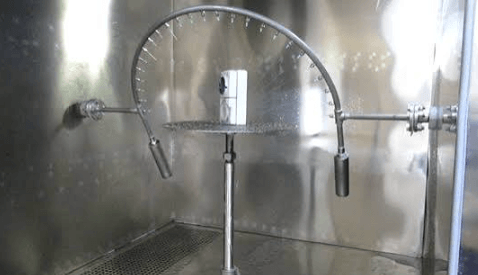
A dedicated LIB industry ipx9k test machine can provide a controlled setup for high-pressure water jet testing when its specifications match the required standard. Before testing begins, operators should verify the equipment configuration, sample mounting, and applicable test parameters.
Why Manufacturers Use IPX9K Testing
Automotive Components
Vehicles contain electrical connectors, sensors, lighting assemblies, control modules, and other components that may encounter water during cleaning or use. Some parts are installed in locations exposed to demanding environmental conditions.
High-pressure water testing helps manufacturers investigate whether protective housings and seals can withstand the specified exposure. Results can guide design improvements and support verification against customer requirements.
Industrial Electrical Equipment
Electrical enclosures used in factories and outdoor installations may need to tolerate cleaning procedures involving powerful water jets. Testing can reveal weaknesses around doors, fasteners, joints, and cable entry points.
The required protection level depends on where the equipment will be installed and how it will be maintained. Manufacturers should not assume that every industrial enclosure requires an IPX9K rating; the test should reflect the actual operating conditions and relevant specifications.
Outdoor Electronic Devices
Outdoor instruments and electronic devices may experience rain, splashing, cleaning, or other forms of water exposure. High-pressure testing can be relevant when products are expected to withstand intensive washdown conditions.
The results help designers assess enclosure construction, gasket selection, connector placement, and the integrity of protective barriers.
Equipment Used in Hygienic or Washdown Environments
Some production environments require frequent cleaning to maintain operational or hygiene standards. Equipment installed in these areas may face repeated water exposure, sometimes at elevated temperatures.
Testing can help determine whether a product’s protective construction is appropriate for its intended cleaning conditions. However, an ingress protection rating alone does not establish suitability for every sanitation chemical, cleaning procedure, or hygiene requirement.
Key Features to Evaluate When Selecting Test Equipment
Choosing suitable test equipment involves more than checking a pressure rating. The entire system must support the intended procedure and provide repeatable operating conditions.
Compliance With the Required Standard
First, identify the exact standard and edition referenced in the product specification. Different standards may define their own requirements for water temperature, pressure, nozzle geometry, distance, exposure duration, and sample movement.
Ask the equipment supplier for technical documentation showing how the proposed configuration supports the required procedure. Any differences between the standard and the equipment’s default settings should be identified before purchase.
Water Pressure and Temperature Control
The equipment must be capable of achieving and maintaining the conditions specified for the test. Review the available operating ranges, control accuracy, monitoring features, and safety provisions.
It is also useful to understand how the system responds during extended testing. Stable performance can reduce interruptions and help laboratories conduct repeatable evaluations.
Nozzle and Sample Positioning
Nozzle geometry, spray direction, and distance from the sample can influence the water exposure. The equipment should support the positioning and movement requirements of the applicable test method.
Consider the size and shape of the products being tested. A setup that works for a compact connector may not accommodate a larger enclosure without different fixtures or positioning arrangements.
Data Recording and Operator Controls
Digital controls can help operators configure test parameters and monitor system operation. Where available, data recording can support traceability by documenting the conditions used during each test.
Laboratories should establish procedures for recording sample identification, test duration, operating settings, observations, and any interruptions. This information helps compare results and investigate unexpected failures.
Safety and Maintenance Requirements
High-pressure hot-water systems require appropriate safety measures. Operators should understand the equipment’s protective features, shutdown procedures, and restrictions on access during operation.
The system should also be accessible for inspection, cleaning, and maintenance. Review the manufacturer’s requirements for pumps, nozzles, filters, water quality, and other serviceable components before finalising a purchase.
Preparing Samples for Reliable Testing
Good sample preparation helps ensure that test results reflect the product’s design rather than inconsistencies in assembly.
Assemble the Product Correctly
Samples should be assembled according to the manufacturer’s documented instructions. Gaskets, covers, fasteners, connectors, and cable entries must be installed as specified.
If the product normally operates with particular accessories or protective caps, the test setup should follow the relevant standard and product requirements. Unrecorded changes can make results difficult to interpret.
Inspect the Sample Before Testing
Record the initial condition of the product and look for visible damage, loose components, damaged seals, or manufacturing defects. Photographing critical areas can provide useful reference material when investigating a failure.
The purpose of the inspection is not to remove every imperfection from the sample but to document its condition before exposure.
Confirm Mounting and Orientation
Secure the sample using the specified mounting arrangement. Incorrect positioning can change the angle and intensity of the water striking a surface.
Where a test requires movement or exposure from several directions, verify the sequence before starting. This reduces the risk of incomplete testing or accidental deviation from the procedure.
Define Post-Test Inspection Criteria
Before testing begins, determine how the product will be evaluated afterward. Depending on the applicable standard, the assessment may involve checking for water ingress, examining internal components, and verifying electrical or functional performance.
Acceptance criteria should be defined in advance. The presence of water does not always have the same significance for every design, so conclusions must follow the relevant standard and product specification.
See also: Emerging Trends in Workforce Technology
Common Testing Errors and How to Avoid Them
One common mistake is using test conditions that do not match the required standard. Equipment capable of producing high pressure does not automatically guarantee that every other test parameter is correct. Operators should verify the complete procedure.
Another issue is poor sample sealing before testing. An incorrectly installed gasket or loose cable gland can cause water entry that reflects an assembly error rather than the intended design. Consistent preparation and documentation help identify such problems.
Neglecting equipment maintenance can also affect results. Blocked or damaged nozzles, unstable water delivery, or inaccurate sensors may change the exposure conditions. Routine checks and servicing help preserve repeatability.
Finally, manufacturers should avoid treating a single successful test as proof of universal waterproof performance. A rating applies to the tested configuration and specified conditions. Changes to materials, assembly methods, connectors, or enclosure design may require further evaluation.
Frequently Asked Questions
1. What does IPX9K testing evaluate?
It evaluates an enclosure’s resistance to high-pressure, high-temperature water jets under the conditions specified by the applicable test standard. It is used for products that may encounter demanding washdown or similar water exposure.
2. Is IPX9K testing necessary for every waterproof product?
No. The appropriate test depends on the product’s intended environment, customer specifications, and applicable standards. Some products require other ingress protection tests instead, while certain applications may require multiple tests.
3. What should manufacturers check before purchasing test equipment?
They should confirm compliance with the required standard, pressure and temperature capabilities, nozzle configuration, sample positioning, control accuracy, safety features, data recording, maintenance requirements, and available technical support.
Conclusion
High-pressure water jet testing provides manufacturers with a structured way to evaluate enclosure protection under demanding exposure conditions. It can help identify weaknesses in seals, joints, connectors, and housing designs before products are deployed in the field.
Reliable results depend on selecting equipment that matches the applicable standard, preparing samples consistently, maintaining controlled test conditions, and documenting the evaluation process. Routine equipment maintenance and clearly defined acceptance criteria further strengthen the value of testing.
When integrated into a broader quality assurance programme, IPX9K testing can support product development, design verification, and confidence in equipment intended for challenging water-exposure environments.