ByJohn A
Balancing Range, Efficiency, and User Experience for Modern Drivers
Core Technology Architecture of Huawei’s Extended-Range Powertrain
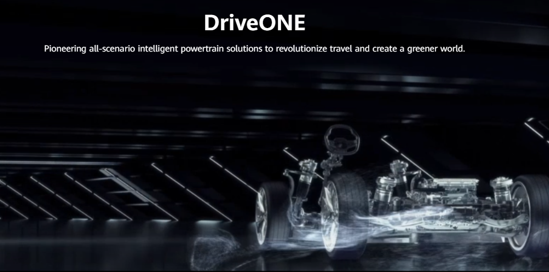
Unlike traditional extended-range systems that are often retrofitted from fuel vehicle platforms, Huawei’s extended-range powertrain is a fully integrated, purpose-built system tailored for electrified vehicles. At its core is the Drive ONE electric motor, a domestically developed unit that leverages advanced flat-wire winding technology to achieve a peak power of 200kW and a maximum efficiency of 97.5%. This is 2 to 3 percentage points higher than the industry average, translating to less energy loss during conversion from electricity to wheel movement. The range-extender, a 1.5-liter Miller-cycle four-cylinder engine, boasts a thermal efficiency of 41%—one of the highest for mass-produced range-extenders globally. What sets this engine apart is its optimized combustion cycle, which delays intake valve closure to reduce pumping losses, boosting fuel efficiency without sacrificing power. The entire powertrain integrates the motor, engine, battery pack, and battery management system (BMS) into a single, compact unit, eliminating unnecessary components like traditional transmissions and drive shafts. This integration cuts the overall system weight by approximately 120kg compared to competing extended-range setups, a key factor in improving both efficiency and driving dynamics. The battery pack, extended range powertrain paired with a leading BMS from Huawei, has a capacity of 40kWh, delivering a CLTC-rated pure electric range of 200km—more than enough for most daily commutes, which average less than 50km per day for Chinese drivers.
Key Advantages Over Traditional Extended-Range Systems
When compared to conventional extended-range powertrains, Huawei’s design addresses three major pain points that have held back the technology: noise, efficiency, and range. First, NVH (Noise, Vibration, Harshness) performance. Traditional range-extenders, often three-cylinder units, produce noticeable vibration and noise when activated, with some models measuring up to 58 decibels—similar to a busy street. Huawei’s four-cylinder range-extender, paired with an active balance shaft and multi-layer acoustic insulation, cuts that noise to 52 decibels, equivalent to a quiet office. Many early users of Huawei-powered vehicles report barely noticing the range-extender kick in during highway driving, a stark contrast to the rough operation of older extended-range systems. Second, combined efficiency. The 41% thermal efficiency of the range-extender translates to lower fuel consumption: the combined fuel economy of a Huawei-equipped extended-range vehicle is 4.7L per 100km, nearly 25% better than the 6L average for traditional extended-range models. Full fuel and battery, the total range exceeds 1,100km—enough to drive from Beijing to Shanghai on a single tank and battery, eliminating range anxiety for long trips. Third, smart mode switching. The powertrain’s intelligent energy management system automatically adjusts between pure electric, range-extended, and hybrid modes based on real-time driving conditions. In city traffic, it defaults to pure electric to save fuel; on highways above 120km/h, it activates the range-extender to maintain efficient power delivery; and in cold weather, it prioritizes battery heating to preserve range. This dynamic adjustment is far more responsive than the fixed mode logic of older systems.
See also: PSPCL Bill: Check, Download, and Pay Electricity Bill Online
Real-World Deployment and User-Centric Case Studies
The most tangible proof of Huawei’s extended-range powertrain’s value comes from its deployment in the AITO M5 and AITO M7 models, developed in partnership with Seres. Since launching in 2022, these vehicles have sold over 120,000 units, with extended-range variants accounting for more than 70% of sales. Take Li Ming, a Shanghai-based office worker who commutes 60km daily. He charges his AITO M5 extended-range at home overnight, spending only 120 yuan ($16) on electricity per month. For weekend trips to Hangzhou (170km one way), he rarely needs to charge; a single 200 yuan fuel fill-up covers over 1,000km, cutting his monthly transportation costs by half compared to his previous gasoline car. Another case is Wang Jun, a Guangzhou-based ride-hailing driver who uses an AITO M5 extended-range for work. He drives 220km daily, covering most of his routes on pure electric. Only on rare long trips at night does he need to refuel, saving him about 1,800 yuan ($250) per month on fuel—more than enough to offset the higher initial vehicle cost. Winter performance is another highlight: in Beijing, a user named Zhang Lina reported that her AITO M7 extended-range delivered 160km of pure electric range at -12°C, a 20% improvement over competing extended-range SUVs. This is thanks to Huawei’s BMS, which uses active thermal management to keep battery cells at an optimal temperature, even in freezing conditions. For family users, Chen Wei from Shenzhen used his AITO M7 to drive a family of four to Huizhou for a weekend trip, covering 1,200km with only one fuel stop, and noted that the range-extender’s quiet operation made the ride comfortable for his children.
Market Impact and Future Roadmap
Huawei does not manufacture cars directly; instead, its extended-range powertrain is a key component for its smart mobility partners, including Seres, Chery, and JAC. This model has allowed Huawei to scale its technology rapidly: in 2023, Chinese extended-range vehicle sales reached 520,000 units, with Huawei-powered models capturing a 31% market share—ranking first in the segment. Policy support has also boosted adoption: China’s dual credit policy and new energy vehicle incentives prioritize extended-range vehicles, as they reduce emissions while solving pure electric’s range limitations. For 2024, Huawei is set to launch a second-generation extended-range powertrain, with a target thermal efficiency of 45% and a pure electric range of 250km—enough for most drivers to go a full week without charging. The new system will also integrate AI-driven energy management, which learns a user’s driving habits, navigates routes, and even adjusts for weather to optimize range. For example, it will delay range-extender activation on rainy days, when battery efficiency drops, or increase power during uphill climbs. Looking further ahead, Huawei is exploring compatibility with hydrogen fuel-cell range-extenders, which would make the system zero-emission for long-haul travel, a gap that pure electric vehicles still struggle to fill. Additionally, the powertrain will be fully integrated with Huawei’s HarmonyOS cockpit, allowing users to control range-extender functions via voice commands, set range goals, and receive personalized recommendations for charging and refueling. This focus on user experience and technical innovation has positioned Huawei’s extended-range powertrain as a leading solution in the global push for electrified mobility, with ongoing partnerships expanding its reach across mid-size and full-size vehicle segments.