ByJohn A
Tailored Rotation Systems for Specialized Industrial Machinery
Industrial machinery often needs to rotate heavy loads accurately while maintaining stability under demanding operating conditions. Applications such as cranes, material-handling systems, construction equipment, and industrial positioning machines rely on mechanisms that support controlled rotational movement. When standard components cannot meet the required load capacity, installation dimensions, or motion characteristics, a customized solution may be necessary.
Slew drives are designed to provide controlled rotation in mechanical systems. Their performance depends on the interaction between the drive mechanism, supporting bearing, gear arrangement, mounting structure, and control system. Selecting the right configuration requires an understanding of the equipment’s operating environment and the forces it must handle.
Customization allows engineers to align the drive system with the needs of a particular machine rather than forcing the design to fit a standard configuration.
Understanding Industrial Slew Drives
A slew drive is a mechanical assembly that enables controlled rotational movement. Depending on the design, it may incorporate a slewing bearing, a worm gear or other drive mechanism, a housing, and an input connection for a motor or actuator.
The assembly supports rotation around an axis while transmitting loads between connected structures. In many applications, it must also withstand forces generated by the weight of the supported equipment, external loads, movement, and operating conditions.
Slew drives are used in equipment that requires a combination of rotation and load support. Examples include aerial work platforms, solar tracking systems, cranes, lifting equipment, and selected industrial positioning machines.
The exact configuration varies according to the application. A drive intended for precise positioning may have different priorities from one designed for heavy-duty industrial movement. Understanding these differences is essential when specifying the system.
Why Customization Is Important
Matching Load and Torque Requirements
Every application imposes a particular combination of loads. These may include axial loads, radial loads, and overturning moments, along with the torque required to initiate or maintain rotation.
Engineers should evaluate the expected operating loads, movement frequency, acceleration, stopping conditions, and possible shock loads. These factors influence the bearing arrangement, gear ratio, drive capacity, mounting structure, and motor selection.
A customized design can address the actual demands of the equipment. It may help avoid a configuration that is undersized for the application or unnecessarily large and expensive.
Load calculations should account for both normal operation and reasonably foreseeable demanding conditions. Appropriate safety factors and engineering standards should be applied according to the machine’s purpose.
Accommodating Installation Constraints
Industrial equipment frequently has limited installation space. Existing structures, mounting holes, shaft locations, and surrounding components may restrict the available dimensions.
Customization can address these constraints through suitable mounting interfaces, housing dimensions, connection arrangements, and overall assembly geometry.
This is particularly useful when replacing a component in an established machine. A replacement drive may need to match the existing structure while meeting updated performance or maintenance requirements.
Accurate drawings are essential. Before manufacturing begins, the customer and supplier should confirm mounting dimensions, bolt patterns, clearances, input connections, and any interface requirements.
Achieving Appropriate Rotation Performance
Different machines require different movement characteristics. Some need slow, controlled rotation under heavy loads, while others require precise positioning or repeated movements through a defined angular range.
The required torque, rotational speed, gear ratio, backlash, and positioning accuracy should be considered together. Improving one characteristic may influence others, so the design must balance the requirements of the complete system.
Engineers should also consider how the drive will start, stop, and respond to changes in load. These factors can affect both mechanical performance and the control strategy.
Addressing Environmental Conditions
The working environment can influence component selection and service life. Outdoor equipment may face rain, dust, temperature variation, and corrosion risks, while industrial facilities may expose machinery to contaminants or frequent cleaning.
The housing, seals, lubrication, materials, and protective coatings should be selected with these conditions in mind. Environmental protection must be suitable for the actual exposure rather than based on a general assumption that the assembly will remain sealed under every circumstance.
Maintenance access should also be considered during design. A configuration that allows convenient inspection and lubrication can simplify routine servicing.
Important Components of a Customized Slew Drive
Slewing Bearing
The slewing bearing supports relative rotation between connected machine structures. Its design must accommodate the loads and movement requirements of the application.
Bearing selection depends on factors such as load direction, overturning moment, rotational speed, mounting conditions, and available space. The bearing must also be compatible with the mating structures and the drive mechanism.
Proper installation is important because mounting-surface flatness, bolt tightening, and structural stiffness can affect load distribution. Even a suitable bearing may perform poorly if the supporting structure is not prepared correctly.
Gear Mechanism
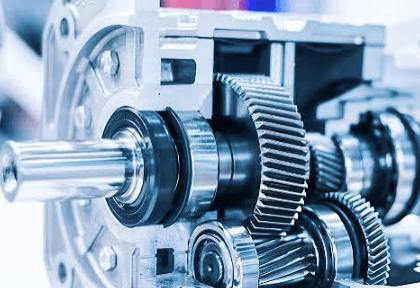
The gear arrangement transfers motion and torque through the drive assembly. Depending on the application, the design may use a worm gear or another suitable gear configuration.
Gear ratio influences the relationship between input speed and output speed. Gear geometry, contact conditions, lubrication, and manufacturing accuracy also affect operating efficiency, wear, and movement quality.
The selected mechanism should be appropriate for the expected load and duty cycle. Engineers should review the manufacturer’s specifications instead of assuming that all slew drives have the same performance characteristics.
Housing and Mounting Structure
The housing protects and supports the drive components while maintaining their intended alignment. Its geometry and stiffness influence how forces move through the assembly.
Mounting surfaces and fasteners must be suitable for the applied loads. Poor structural support or incorrect bolt installation can lead to uneven loading, excessive deformation, or premature component damage.
For customized projects, interface drawings should be reviewed carefully before production to reduce the risk of fitment problems during installation.
Lubrication and Sealing
Lubrication helps reduce friction and wear at the relevant contact surfaces. The appropriate lubricant and maintenance interval depend on the mechanism, operating conditions, and manufacturer’s instructions.
Sealing arrangements help protect internal components from contamination and lubricant loss. Their effectiveness depends on the seal design, installation, temperature conditions, and exposure to dust or moisture.
Maintenance requirements should be documented clearly so that operators understand how to inspect and service the assembly throughout its working life.
Industries That Benefit from Customized Rotation Systems
Construction and Lifting Equipment
Cranes, lifting platforms, and selected construction machines require controlled rotation while carrying substantial loads. Their drive systems must operate within defined mechanical limits and remain compatible with the equipment’s safety requirements.
Customization may help address installation dimensions, torque requirements, environmental exposure, and the operating cycle of the machine.
The complete lifting system must still be evaluated according to applicable safety standards. Selecting a drive alone does not establish that the entire machine is safe for a particular lifting task.
Solar Tracking Systems
Solar tracking equipment rotates panels or supporting structures to adjust their orientation. Depending on the installation, the drive may need to operate outdoors and withstand wind-related forces, temperature changes, and long periods of service.
A suitable design should account for the required movement range, structural loads, control strategy, and environmental conditions. Maintenance accessibility and protection against contamination are also important considerations.
Industrial Positioning Equipment
Manufacturing facilities may use rotating platforms and positioning mechanisms to move workpieces into suitable operating positions. These applications can require repeatable movement, stable support, and compatibility with automated controls.
The required positioning performance should be defined clearly. Engineers may need to consider the mass of the workpiece, eccentric loading, movement frequency, stopping accuracy, and the way the drive interfaces with the control system.
Selecting a Customization Partner
Choosing a supplier requires more than comparing quoted prices. Buyers should evaluate engineering support, manufacturing capability, dimensional control, material traceability, inspection procedures, and experience with the intended application.
A LYHGB Bearing industrial slew drive customization service may be considered when a project requires a drive configuration tailored to particular mechanical or installation requirements. Customers should confirm the available customization options and verify that the proposed design meets the relevant technical specifications.
Before requesting a quotation, prepare a clear specification covering load conditions, required torque, speed, rotation range, mounting dimensions, operating environment, duty cycle, and maintenance expectations.
If the equipment is replacing an existing assembly, provide drawings and measurements of the current installation. Photographs may help explain the arrangement, but they should not replace dimensioned technical documentation.
The supplier should clarify any missing information before finalizing the design. A review of drawings, tolerances, interfaces, and inspection requirements can help prevent avoidable changes after manufacturing has started.
See also: Emerging Trends in Workforce Technology
Best Practices for Reliable Operation
Once a customized drive has been installed, correct commissioning and maintenance are essential. Follow the manufacturer’s installation instructions and verify that mounting surfaces, fasteners, lubrication, and alignment meet the specified requirements.
During commissioning, observe the assembly for unusual noise, vibration, temperature changes, or irregular movement. Confirm that control settings and movement limits are appropriate for the machine.
Routine maintenance should follow the prescribed schedule. Inspections may include checking fasteners, seals, lubrication, gear condition, and any signs of abnormal wear.
Unexpected changes in performance should be investigated promptly. Continuing to operate a damaged or improperly mounted assembly may increase the risk of further mechanical problems.
Frequently Asked Questions
1. What information is needed to customize an industrial slew drive?
Important details include the required loads, torque, rotational speed, movement range, mounting dimensions, duty cycle, operating environment, and control requirements. Existing drawings and interface measurements are especially useful for replacement projects.
2. Can a customized slew drive fit existing machinery?
A customized configuration may be designed around existing installation constraints. However, compatibility must be confirmed through accurate measurements, engineering review, and verification of the required load and performance specifications.
3. How can the service life of a slew drive be supported?
Correct sizing, proper installation, suitable lubrication, environmental protection, and scheduled inspection all contribute to reliable operation. Operators should follow the manufacturer’s maintenance guidance and investigate unusual noise, vibration, leakage, or movement as soon as it appears.
Conclusion
Customized slew drives can help industrial equipment achieve the rotation, load support, and installation compatibility required by specialized applications. Their effectiveness depends on coordinating the bearing, gear mechanism, housing, mounting structure, and control requirements as parts of one mechanical system.
By defining operating conditions clearly, reviewing technical drawings, selecting appropriate components, and maintaining the assembly correctly, manufacturers and equipment owners can make better-informed decisions about rotational drive systems. A structured engineering and quality process supports more dependable integration and helps reduce avoidable performance problems throughout the equipment’s service life.